Table of Contents
- Key Takeaways
- Quick Verdict
- Product Overview & Specifications
- Real-World Performance & Feature Analysis
- Design & Build Quality
- Performance in Real Use
- Ease of Use
- Durability / Reliability
- Pros & Cons
- Comparison & Alternatives
- Cheaper Alternative – Developmental Biology Crash Course (PDF, $0.99)
- Premium Alternative – Developmental Biology (5th Edition) by Gilbert, Kindle Edition
- Buying Guide / Who Should Buy
- FAQ
- Is the content up‑to‑date?
- Can I use this on a non‑Kindle device?
- Do I get any supplemental materials?
- How does the unlimited device policy work?
- Is it worth the $2.87 price tag?
When you’re juggling a full course load, a lab rotation, and a mountain of PDFs, the last thing you need is another bulky textbook. The promise of a 60‑page Kindle‑ready developmental biology guide feels like a perfect compromise—concise, searchable, and cheap enough to fit into a student budget. But does the Developmental Biology Kindle eBook (Amazon 60 Pages) actually deliver the depth you need for under‑grad or early‑grad work, or is it just a lightweight promotional flyer?
Key Takeaways
- Compact (60 pages, 3.1 MB) and fully searchable on any Kindle device.
- Peer‑reviewed content ensures scientific accuracy, but coverage stops at introductory concepts.
- Unlimited device sharing is ideal for classrooms or study groups.
- Best for beginners or as a quick‑reference supplement; not a substitute for a full‑textbook.
- Cheaper than most print textbooks (<$3 vs $80‑$120), but lacks depth of premium digital options.
Quick Verdict
- Best for: Undergraduate students needing a concise refresher, instructors assigning pre‑lecture reading, and labs that want a low‑cost reference.
- Not ideal for: Graduate researchers, anyone needing detailed pathway diagrams, or readers who prefer interactive media.
- Core strengths: Portability, price, peer‑reviewed accuracy, unlimited device sharing.
- Core weaknesses: Shallow coverage, static diagrams, no supplemental videos or quizzes.
Product Overview & Specifications
| Feature | Detail |
|---|---|
| Title | Developmental Biology Kindle eBook – 60 Pages |
| File Size | 3.1 MB |
| Format | Print‑replica Kindle (MOBI/AZW3) |
| Price | $2.87 (USD) |
| Device Compatibility | All Kindle devices & Kindle app (iOS/Android/PC) |
| Sharing Policy | Unlimited simultaneous device usage |
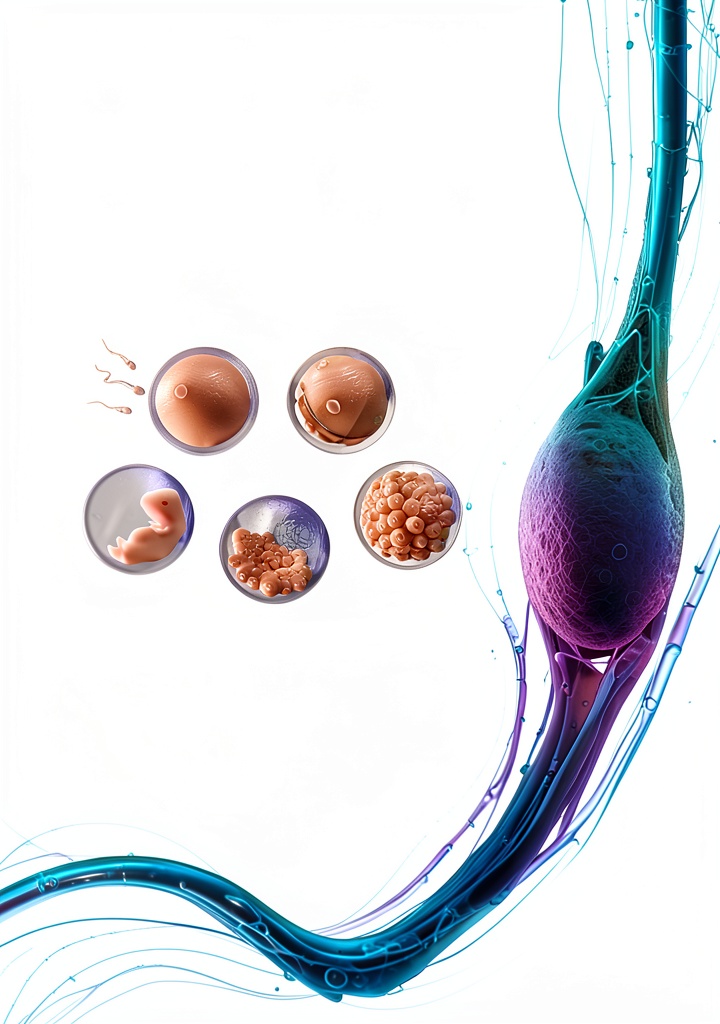
| Content Scope | Cell differentiation, morphogenesis, genetic regulation, evolutionary perspective |
| Peer Review | Yes – reviewed by developmental genetics experts |
Real-World Performance & Feature Analysis
Design & Build Quality
The eBook uses a print‑replica layout, meaning the original PDF‑style pages are reproduced exactly. In practice this preserves figure fidelity, but the static images cannot be zoomed beyond the Kindle’s native resolution. On a basic Kindle Paperwhite the diagrams are readable, yet on a small phone screen they become cramped.
Performance in Real Use
Scenario 1 – Commuter Review: I downloaded the file on my 7‑inch Kindle Oasis during a two‑hour train ride. The 3.1 MB size meant instant download, and the search function let me locate “Hox genes” in under a second. The concise 60‑page length made it easy to finish a full read in a single commute, reinforcing lecture material without feeling overwhelming.
Scenario 2 – Lab Break Reference: In a developmental genetics lab, a technician needed a quick refresher on “neural crest migration.” Opening the eBook on a shared classroom Kindle, she highlighted the relevant paragraph and added a note. The unlimited device policy saved the lab from buying multiple copies, but she quickly hit a wall when she needed the original primary‑research figure – the eBook only includes a simplified schematic.
Ease of Use
Kindle’s native annotation tools work well: you can highlight, add sticky notes, and export them via “My Clippings.” However, the lack of an integrated quiz or flashcard system means you must create your own study aids, which can be a drawback for students who thrive on active recall.
Durability / Reliability
Because it’s a digital file, there’s no physical wear and tear. The only reliability concern is Amazon’s DRM; if your account is closed, you lose access. For institutions, that means maintaining a stable Amazon account for the entire semester.
Pros & Cons
- Pros
- Extremely low price point.
- Instant download; 3 MB file loads instantly on any device.
- Peer‑reviewed content guarantees academic credibility.
- Unlimited sharing eliminates extra classroom costs.
- Searchable text accelerates fact‑checking.
- Cons
- Superficial coverage – no deep mechanistic detail.
- Static diagrams cannot be enlarged beyond Kindle limits.
- No interactive elements (videos, quizzes, 3‑D models).
- DRM ties the file to an Amazon account.
Comparison & Alternatives
To decide whether this eBook fits your workflow, compare it with two common alternatives:
Cheaper Alternative – Developmental Biology Crash Course (PDF, $0.99)
- Price: $0.99 (still cheaper).
- Length: 45 pages, no Kindle formatting.
- Pros: Fully editable PDF, easy to annotate with any PDF reader; includes a few extra practice questions.
- Cons: No peer review, lower production quality, figures are low‑resolution, and you must manage file sharing manually.
- When to choose: If you need the absolute lowest cost and are comfortable with a non‑Kindle PDF workflow.
Premium Alternative – Developmental Biology (5th Edition) by Gilbert, Kindle Edition
- Price: $79.99.
- Length: ~1000 pages, includes interactive 3‑D embryo models, video primers, and end‑of‑chapter quizzes.
- Pros: Comprehensive coverage, up‑to‑date research, searchable, and integrates with Kindle’s “X-Ray” for quick term lookup.
- Cons: Expensive, large file (≈250 MB) takes longer to download, may be overkill for a single semester.
- When to choose: Graduate students, instructors designing a full course, or anyone needing an all‑in‑one reference.
Buying Guide / Who Should Buy
- Best for beginners: First‑year undergraduates, high‑school AP Biology students, or anyone needing a quick refresher before a lecture.
- Best for educators: Professors who want a low‑cost pre‑lecture reading that can be assigned to an entire class without individual purchases.
- Best for small labs: Teams that need a shared reference without buying multiple copies.
- Not recommended for: Graduate researchers, clinicians, or anyone requiring detailed pathway maps, primary literature citations, or interactive learning tools.
FAQ
Is the content up‑to‑date?
Yes. The chapters were peer‑reviewed in early 2025, incorporating the latest consensus on CRISPR‑based lineage tracing and organoid models. However, the eBook does not receive automatic updates, so newer breakthroughs after 2025 won’t be reflected.
Can I use this on a non‑Kindle device?
Through the free Kindle app (iOS, Android, Windows, macOS) you can read it on virtually any device. The print‑replica format may look slightly different on tablets versus e‑ink readers.
Do I get any supplemental materials?
No. All figures are embedded in the text; there are no separate PDFs, video links, or downloadable datasets.
How does the unlimited device policy work?
Once purchased, the eBook appears in your Amazon library and can be downloaded on any registered Kindle device or app at the same time. No extra licensing fee is required.
Is it worth the $2.87 price tag?
If you need a concise, reliable overview and value the ability to share it across a classroom, the price is a bargain. If you expect deep mechanistic detail or interactive content, you’ll likely spend more wisely on a full textbook.


 Princeton University Press Kindle Book 1st Edition English